Compile Crops
Role
Timeline
Team
Skills
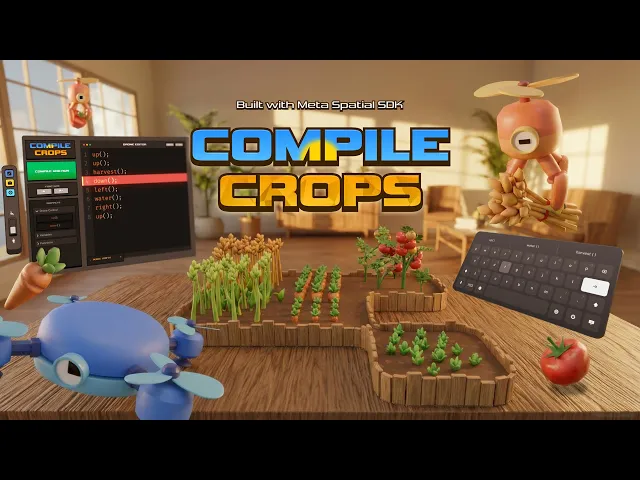
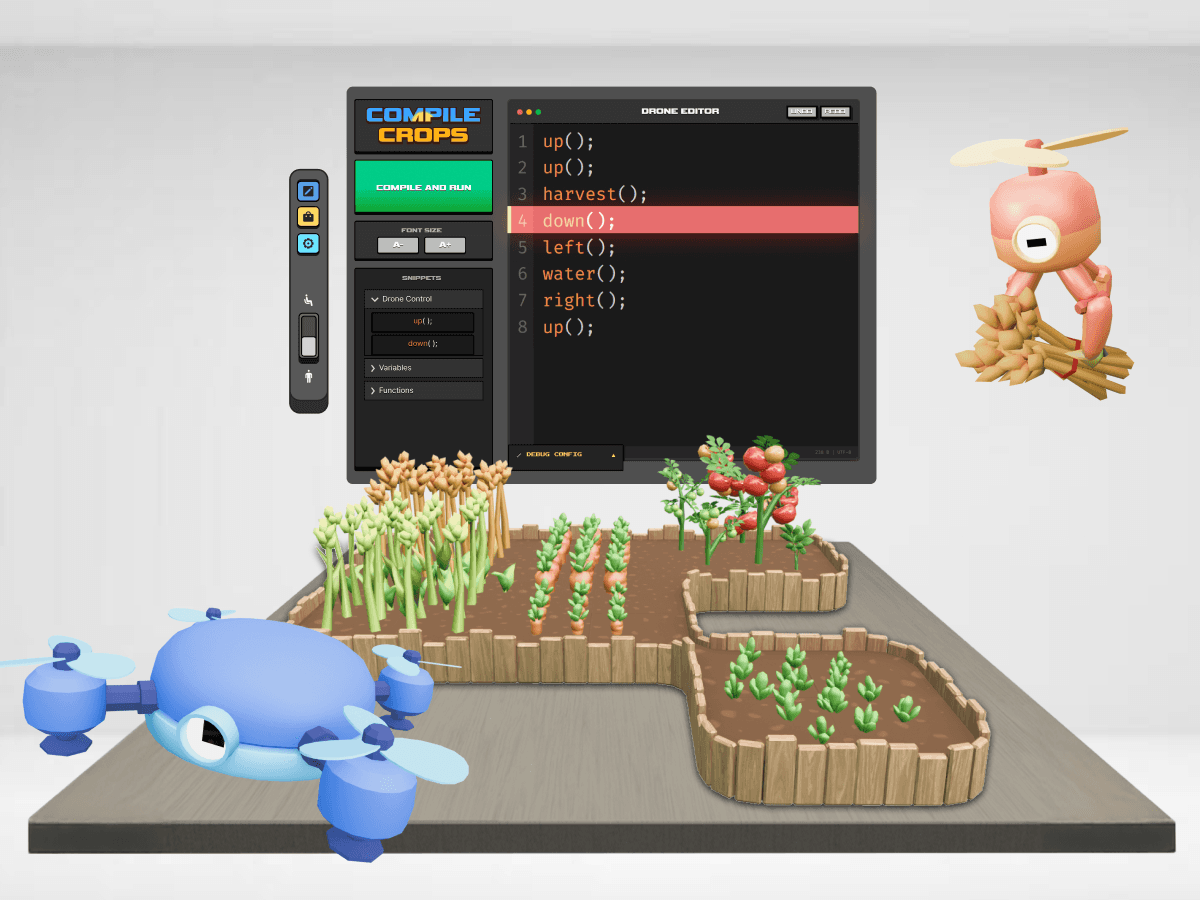
Compile Crops is a mixed-reality edutainment farming simulator built with Meta’s Spatial SDK. Place your plot on your desk or floor, deploy drones, and write code that control how your drones plant, water, and harvest. As you expand your farm, you learn programming fundamentals like loops, conditions, sequencing, and automation through direct spatial feedback.
Final Design
Takeaways
Bridging 2D UI and XR requires constant cross-disciplinary communication
Working closely with a mobile app developer was essential to align traditional 2D UI patterns with spatial interaction models. Constant check-ins helped translate Android-first UI constraints into XR-appropriate behaviors, ensuring Compose panels, spatial entities, and hand-based interactions felt cohesive rather than stitched together.
Presentation matters as much as the product itself
The final video was instrumental in helping Compile Crops stand out. By spending ample time on handmade assets and clean documentation, the video made the experience understandable and compelling to viewers who never touched the app.
Design Problem
Beginner programmers often struggle with how abstract coding feels.
While tutorials and edutainment platforms exist, most rely on flat screens, symbolic representations, and delayed feedback. It is difficult to understand what code does in the real world.

Apps and Videos do work, but not for everyone.
What if programming logic could be seen instead of inferred?
We set out to design a cozy, non-intimidating coding environment in mixed reality, one that replaces abstract symbols with spatial cause and effect. The challenge was to create an experience that felt welcoming to beginners while still teaching real foundational concepts through interaction rather than instruction.
Process
Storyboarding
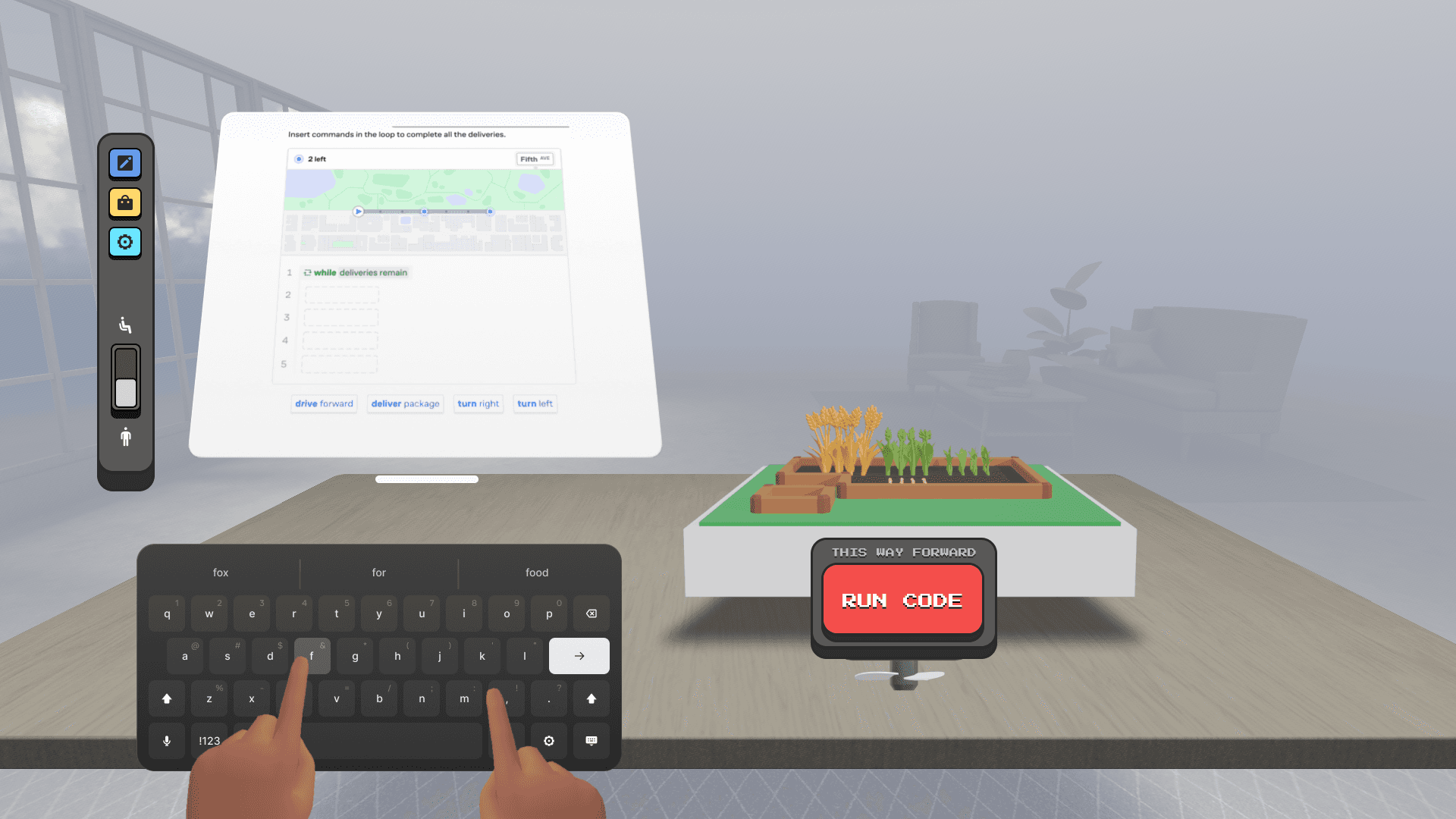
We started by storyboarding the experience from a UX perspective, mapping how users would move between learning, interaction, and feedback. We landed on a farming simulator as the core metaphor because it naturally supports progression, repetition, and visible cause and effect. The biggest open question was how to make coding feel accessible through hand tracking. We explored keyboard input early on, but ultimately shifted toward drag-and-drop coding blocks that could be placed spatially, allowing users to focus on logic rather than syntax.
Gameplay Loop
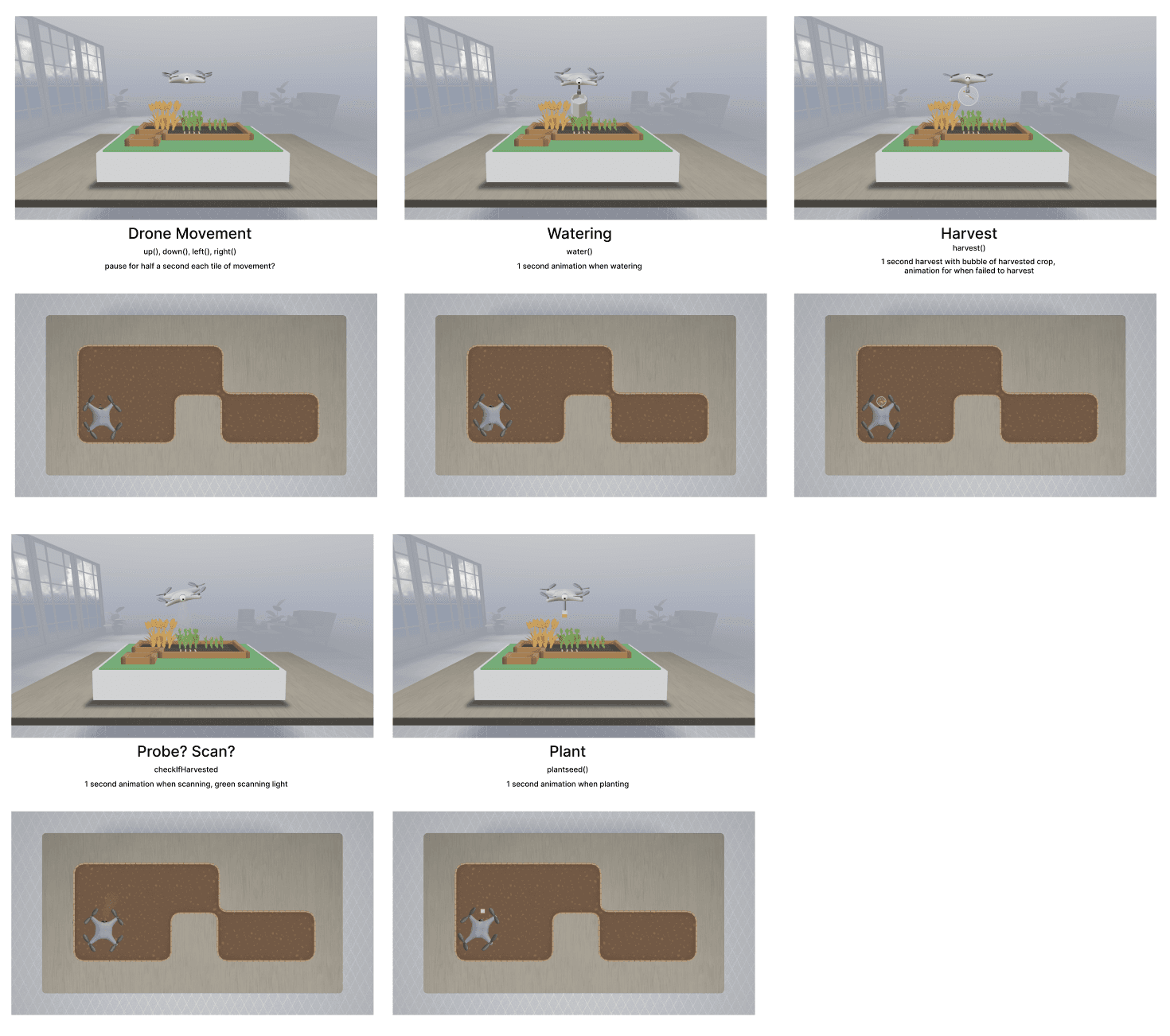
Each gameplay stage builds on the previous one: drones begin idle, receive instructions, perform actions, and unlock new capabilities as the player progresses. Showing all drone stages side-by-side highlights how complexity grows over time, reinforcing learning through visible system behavior rather than tutorials or text-heavy explanations.
Asset Design
To keep the experience lightweight and responsive, special care was taken to design low-poly assets with fully baked textures. By baking lighting and detail directly into textures, we avoided real-time shadows while still achieving vibrant, stylized visuals. This approach ensured consistent performance across scenes while maintaining a cozy, approachable aesthetic. Working within the Spatial Editor introduced additional constraints, such as sensitivity to material names and UV layout. Much time was spent simplifying asset pipelines and rebaking assets to ensure compatibility.
look how pretty these are
look how pretty these are
Current Design
Basic Compiling Experience
Passthrough Dimming
Thank you!
Compile Crops received the Best Use of Spatial SDK award, earning our team $50,000 in funding. Thank you to everyone who supported this project along the way. This experience was both challenging and incredibly rewarding, and it solidified my confidence in building thoughtful, spatial-first products at the intersection of design and emerging technology.